
Read this map
This is a functional industry map, not a verified supplier-to-customer network. The companies linked here publish products relevant to particular functions. Their inclusion does not establish that they supply one another.
| Layer | Typical elements | Read next |
|---|---|---|
| Motion components | Servo drives, motors and feedback devices | Servo systems |
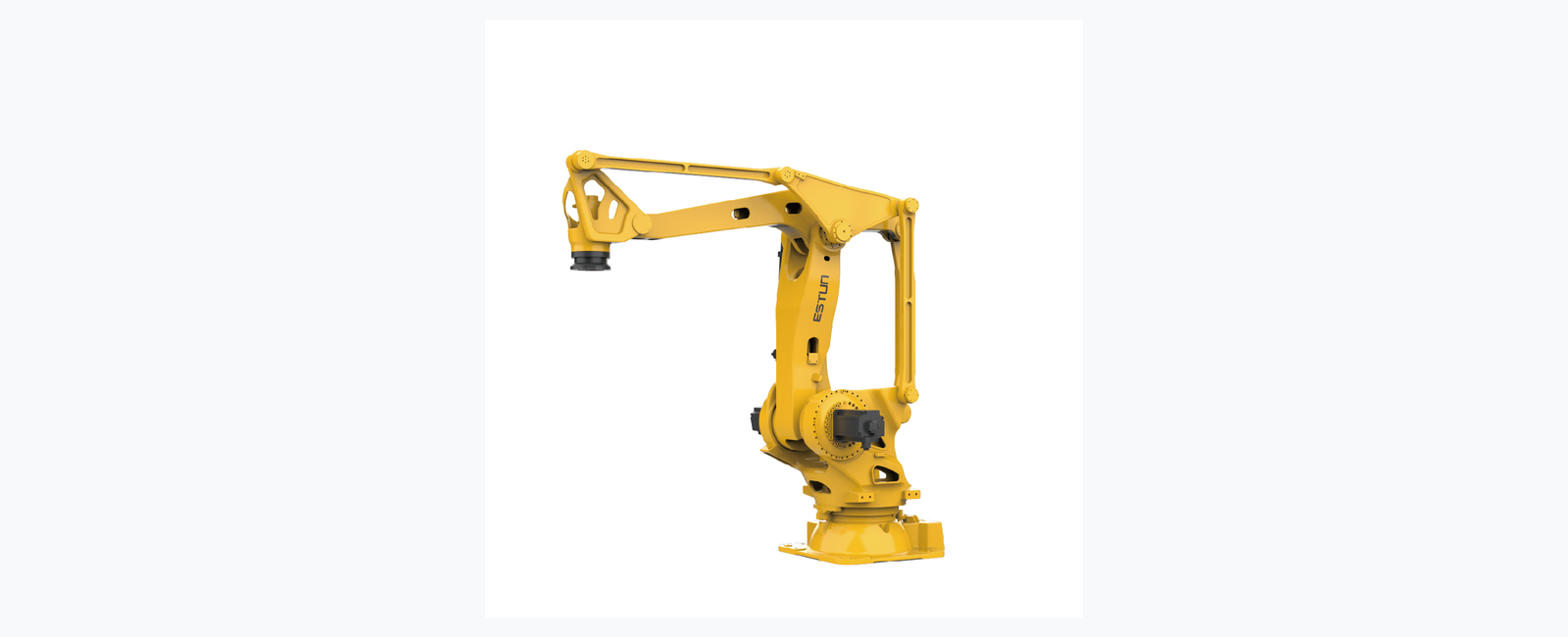
| Robot system | Mechanical structure, transmission and controller | ESTUN company profile |
| Production cell | Tooling, fixtures, sensing and integration | Robotics & Industrial Automation |
From a component to an application
A drive and motor create controlled motion. Mechanical transmission and bearings support the robot's moving structure. A controller coordinates the axes. Tooling, sensing, fixtures and application software turn the robot into a system that can perform a defined task. Integration is where these pieces are selected and tested together.
What a company profile can tell you
Check whether a company sells components, a complete robot, an integrated cell or several of these. Then check the product family and application. Broad labels such as 'robotics company' can hide substantial differences in manufacturing role.
The main manufacturing roles
An industrial robot sits between a component supply chain and an application supply chain. On one side are motion-control electronics, motors, feedback devices, bearings and mechanical transmission. On the other are grippers or process tools, fixtures, sensors, guarding and the engineering needed to make the cell work. Looking at both sides explains why buying a robot is only part of building an automated production process.
| Element | Function in the system | What to distinguish |
|---|---|---|
| Controller | Coordinates the motion and operating sequence. | Robot control versus the wider line-control system. |
| Servo drive and motor | Convert electrical commands into controlled movement. | The drive electronics, motor and complete motion package. |
| Encoder or feedback device | Reports motion or position to the control system. | The measured signal and the way it is used by the controller. |
| Mechanical transmission | Transfers motion and load through the robot structure. | The transmission design and the application it serves. |
| End-of-arm tooling | Performs the handling or process operation. | A gripper, welding tool and dispensing tool do different jobs. |
| Fixtures and sensing | Locate workpieces and provide process information. | Part positioning, presence detection and inspection. |
| System integration | Connects the robot and supporting equipment into a working cell. | A robot product versus a commissioned production system. |
Example: following a part through a handling cell
Imagine a cell that transfers a component from a machine to an inspection station. A fixture presents the part in a known location. A sensor provides information about the part or station. The control system coordinates the machine state and the handling sequence. The robot moves the tool, the gripper holds the component, and the inspection equipment evaluates the required feature.
Each stage creates a different industrial role. The business that makes the gripper may not make the robot. The company integrating the cell may buy both. The machine builder may supply its own control interface, while the inspection system has separate measurement requirements. This example describes a possible functional arrangement; it does not identify an actual factory or commercial relationship.
Two company profiles to read alongside this map
ESTUN provides a useful route into robot hardware and motion control. Its supplied profile and official product information cover industrial robots, servo systems, controllers and application-oriented systems. Read it to see how one manufacturer can participate in several layers of the map.
Inovance provides a complementary view of the automation layer. Drives, servos, PLCs and other controls connect the company to a wider range of machines, including equipment beyond robotics. The overlap between product categories does not make the companies interchangeable, and it does not establish that one supplies the other.
How to interpret a company’s position
Start with the specific product or business unit. A group may sell a component, a robot body and an integrated solution under different businesses. Then separate a product claim from a project claim: a catalogue can show that a product exists, but it does not establish that the product is installed in a named factory. A credible project description needs its own source and context.
Finally, distinguish manufacturing geography from a registered address. A headquarters entry belongs in a company profile; it is not sufficient evidence of a factory location. The same discipline applies to capacity, customer names and automation performance. Those details need a dated source and a clear definition before they become part of an industry map.
Continue reading
The Electric Vehicle Supply Chain