
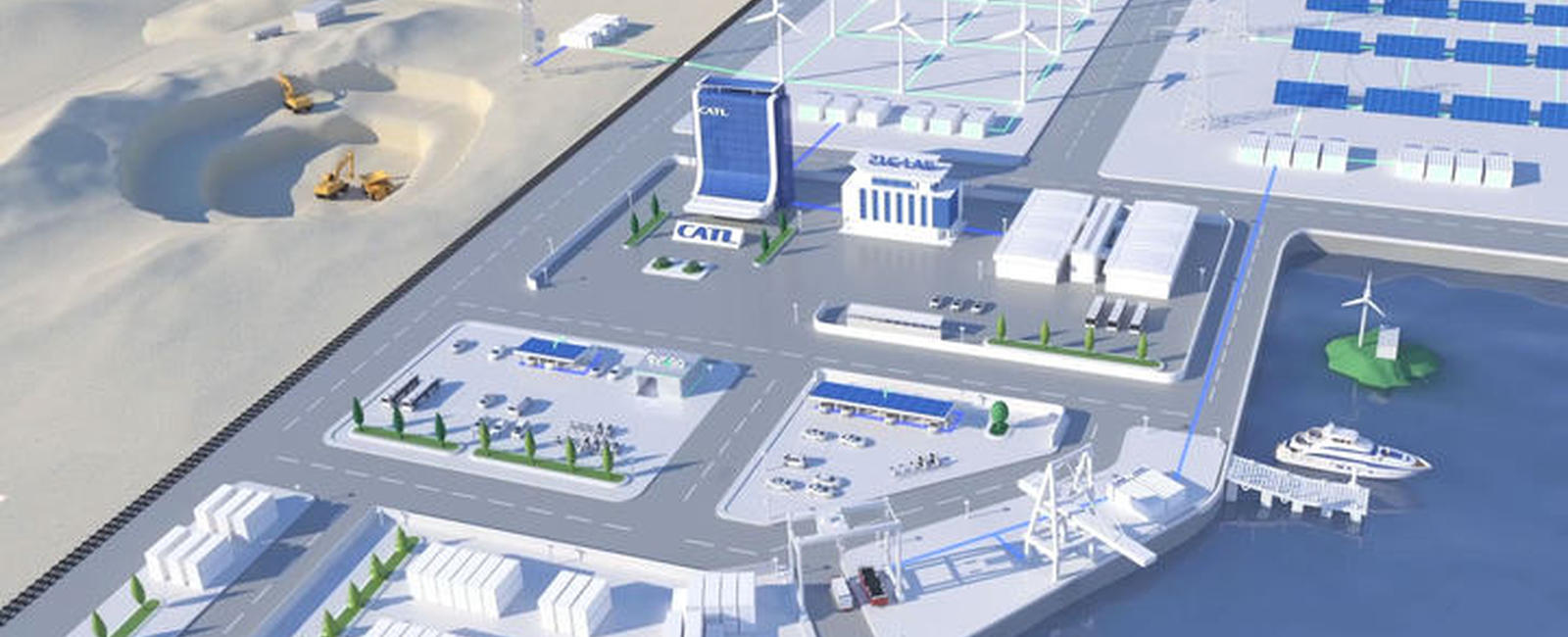
Read this map
The map describes manufacturing functions for a battery-electric vehicle. It is not a list of approved suppliers or evidence of purchasing relationships. Vehicle architectures and the degree of in-house manufacturing differ by manufacturer.
| System | Manufacturing scope | Related reading |
|---|---|---|
| Battery | Cells, interconnects and pack integration | Battery cells, modules & packs |
| Electric drive | Motor, power electronics and drive integration | Inovance company profile |
| Vehicle | Structures, subsystems and final assembly | BYD company profile |
| Monitoring | Cell measurement and battery management | Battery management systems |
Energy, motion and integration
Battery cells are assembled into a vehicle battery system. Power electronics manage energy delivered to the traction motor. The vehicle also needs charging equipment, temperature control and low-voltage electrical power. Mechanical structures, electronic controls and final assembly bring these systems together.
Separate company roles
A cell producer, a pack integrator and a vehicle manufacturer can be different businesses. A vertically integrated company can cover several activities. Compare the specific business unit and product before assigning a company to a node; a group-level description may not identify the legal entity that makes a component.
The value chain is wider than the traction battery
A battery-electric vehicle brings together electrochemistry, electrical engineering, electronics and mechanical production. The battery is central, but a useful industry map also follows the drive system, charging equipment, vehicle structures and final integration. These branches meet at the vehicle rather than forming one simple linear production line.
| Manufacturing branch | Main output | Where it connects |
|---|---|---|
| Cell production | Electrochemical cells | Battery system integration |
| Pack integration | Connected cells, enclosure and associated systems | Vehicle structure, controls and temperature management |
| Electric drive | Motor and power electronics | Vehicle propulsion |
| Charging and conversion | On-board charging and power conversion equipment | Battery and electrical architecture |
| Structures and components | Body, chassis, housings and other mechanical parts | Vehicle assembly |
| Controls and sensing | Electronic control and measurement systems | Coordinated vehicle operation |
| Final integration | An assembled and validated vehicle | Distribution and vehicle use |
A cell factory and a pack operation do different work
Cell manufacturing produces the electrochemical unit. Pack integration connects cells into a larger system and brings in electrical, mechanical and monitoring functions. In some architectures cells are first assembled into modules; in others the integration path differs. A statement about a cell supplier therefore should not automatically be read as a statement about the complete pack or vehicle.
This distinction also matters when reading company data. A manufacturing capacity figure needs to state what is being measured: cells, packs, completed vehicles or another output. A planned facility, a commissioned line and actual production are different descriptions. This introductory map deliberately avoids combining those measures into an unsupported ranking.
Company roles in this collection
BYD illustrates a company operating across vehicles and several new-energy activities. CATL offers an entry point into battery systems and energy storage. Inovance connects the discussion to powertrain technology and industrial automation. The profiles explain published business scope; listing the companies together does not claim a supply agreement between them.
From an industry map to a documented relationship
To describe a specific supplier relationship, look for an attributable disclosure about the named businesses, product and time period. A generic reference to automotive customers does not identify a particular vehicle programme. Likewise, group-level information should not be assigned to every subsidiary or factory. Keeping functional roles separate from documented transactions makes the map useful without overstating what the sources show.
Continue exploring
- Electric Vehicles & Batteries
- BYD
- CATL
- Inovance
- Battery Cells, Modules & Packs
- Battery Management Systems, Explained
Continue reading
The Industrial Robot Supply Chain